
mSAF. Jet fuel from methane, made the same way.
eSAF answered how to make aviation fuel without oil. mSAF answers a harder question: how to make a great deal of it, soon, in the places where the feedstock is already sitting on the ground.
Scroll sideways to follow the whole pathway.
The same jet fuel, from a feedstock that is already everywhere
mSAF is sustainable aviation fuel produced from methane. The methane can come from a pipeline, from associated gas at a wellhead that would otherwise be flared or vented, from renewable natural gas captured at a landfill or digester, or from tail gas at a refinery or gas plant. Infinium Reform™, our electrified steam reformer, turns that gas into syngas using electricity in place of fired heat. The syngas then passes through Infinium Synthesize™, the same chain-limiting catalyst step that finishes eSAF, and comes out as jet fuel.
That last point is the important one. mSAF is not a different fuel with a different approval path and a different handling procedure. The molecule leaving a Synthesize reactor is a synthetic paraffinic kerosene with no sulfur and very low aromatics, whether the carbon entering the plant arrived as CO₂ or as CH₄. Downstream of the plant gate, mSAF and eSAF are handled identically.
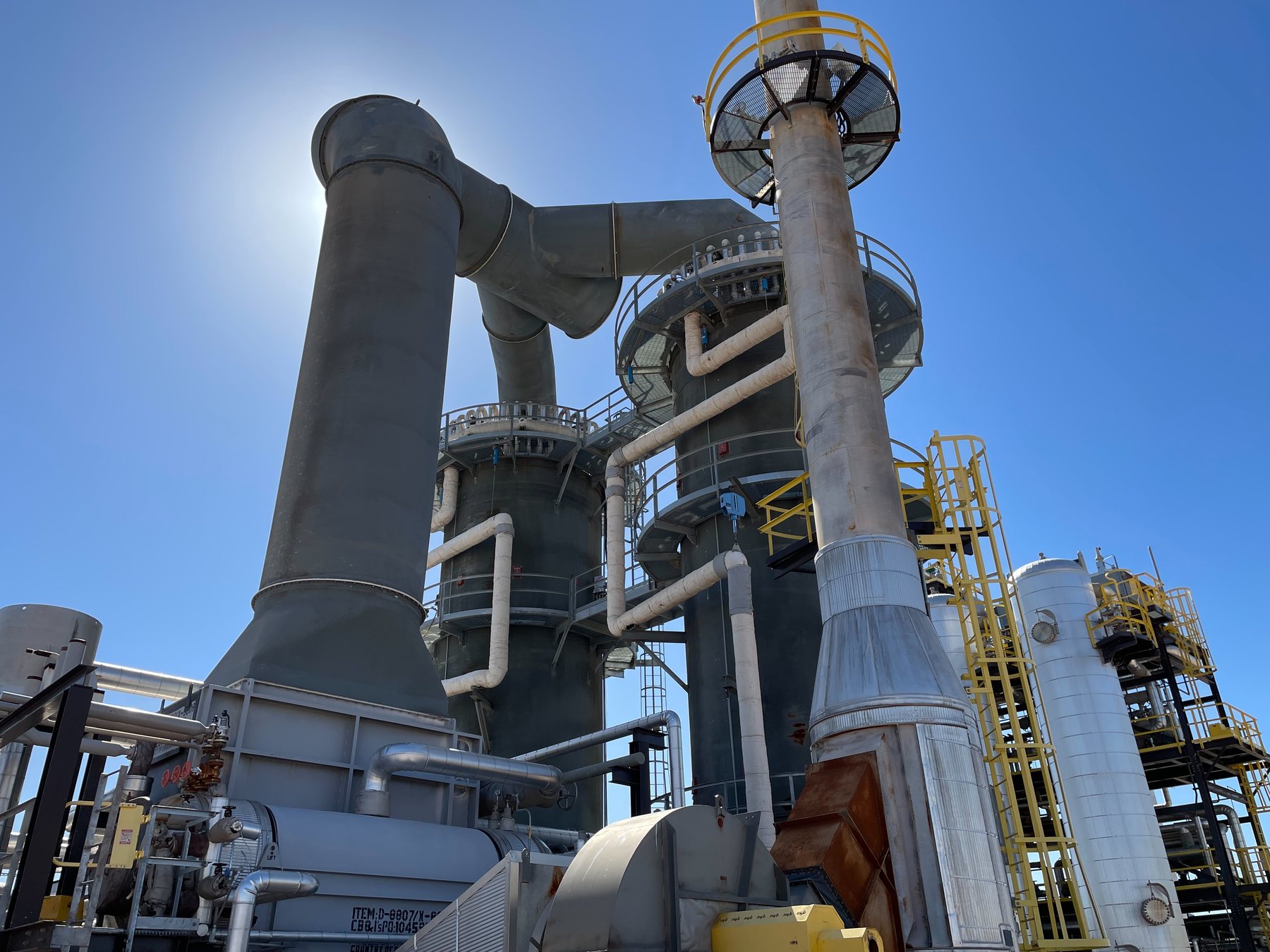
Reform™ is already the world's first electrified steam methane reformer at commercial scale, and Infinium is now building the world's largest. That unit is what puts mSAF at industrial volume rather than demonstration volume.
Aviation needs volume this decade, not next
The world needs something on the order of eight million barrels a day of sustainable aviation fuel by 2050 to meet net zero commitments. Today SAF is under one per cent of jet fuel supply. Every credible route to closing that gap has to be built, financed and commissioned — and the power-to-liquids route, for all its elegance, is gated on two of the slowest things in the energy system: new renewable generation and new electrolyser capacity.
mSAF is not a replacement for that route. It is a way to put steel in the ground while it matures.
Capital goes further
The electrolyser is the largest single item of capital cost and power demand in a power-to-liquids plant. Reforming methane instead removes it, which changes what a project costs and what it needs from the grid.
Sites become available
Basins with associated gas, RNG clusters and gas processing hubs already have the feedstock, the land, the permits and the pipeline connections. They do not have to wait for a renewable build-out.
Reforming at industrial scale
The electrified reformer Infinium is building will be the largest in the world, which is what takes this from a demonstration to a fuel supply.
Waste gas becomes fuel
Gas that is flared or vented is a climate liability and a wasted asset. Converting it to jet fuel addresses both, and the methane never reaches the atmosphere.
What can feed an mSAF plant
Reform™ was built for flexibility, because gas streams in the real world are rarely clean and rarely constant. The table below sets out the streams the system is designed around and what each one implies for the finished fuel.
| Stream | Typical source | Carbon intensity effect | Notes |
|---|---|---|---|
| Renewable natural gas | Landfill gas, anaerobic digesters, agricultural waste | Lowest. Can approach or pass zero on a lifecycle basis | Strongest position under low-carbon fuel programmes |
| Associated and flare gas | Oil production sites where gas is flared or vented | Low. Credits the avoided flaring or venting | Requires gathering infrastructure at site |
| Biogas, raw | Digesters and wastewater treatment | Low | May need upstream clean-up depending on composition |
| Refinery and process tail gas | Refineries, gas processing, petrochemical plants | Moderate. Depends on the alternative use of the stream | Suits co-location with an existing asset |
| Pipeline natural gas | Grid supply | Highest of the mSAF routes, still materially below fossil jet | Useful for baseload and for firming an intermittent feed |
Being straight about the carbon
eSAF has a simple carbon story: the carbon in the fuel was captured waste CO₂, the energy was renewable, and the lifecycle reduction lands around ninety per cent against fossil jet. mSAF is more nuanced, and it would be misleading to publish a single number for it.
The lifecycle carbon intensity of mSAF depends on three things: where the methane came from, what would have happened to it otherwise, and how the reformer is powered. An mSAF plant running on renewable natural gas and renewable electricity sits at one end of that range. A plant running on pipeline gas and grid power sits at the other. Both produce spec-grade jet fuel; they do not produce the same environmental claim, and we do not market them as though they do.
Infinium certifies carbon intensity pathway by pathway, per project, with the relevant accredited body, and every offtake contract references the certified figure for the specific plant supplying it. Indicative ranges for each feedstock are to be inserted once the third-party pathway modelling is finalised.
How mSAF is classified
Low-carbon fuel programmes treat feedstocks differently, and the label matters commercially. Under RefuelEU Aviation, the synthetic aviation fuel sub-target is written around fuels made from renewable hydrogen and captured carbon, so fuel derived from fossil natural gas falls outside it, while fuel from qualifying biogenic methane may be treated under a different heading depending on the pathway and the hydrogen source. In the United States, eligibility under state low-carbon fuel programmes and federal SAF incentives turns on the certified lifecycle carbon intensity of the specific pathway rather than on the product name.
Infinium works this through project by project with certifying bodies and offtakers instead of making a blanket claim. Policy and legal to confirm final wording before publication.
Where each one fits
Infinium is not choosing between these. A portfolio that can site a plant against either a CO₂ stream or a gas stream can be built in far more places than one that can only do the first.
| eSAF | mSAF | |
|---|---|---|
| Carbon feedstock | Waste CO₂ from an industrial point source | Methane: pipeline, flare, RNG or tail gas |
| Hydrogen source | Water electrolysis using renewable power | Reforming the methane feed |
| Front-end system | Infinium React™, reverse water-gas shift | Infinium Reform™, electrified steam reforming |
| Fuel synthesis | Infinium Synthesize™ | Infinium Synthesize™, identical |
| Electrolyser required | Yes, and it dominates capital cost | No |
| Power demand | Very high | Materially lower |
| Lifecycle GHG reduction | Around 90% against fossil jet | Feedstock dependent. See carbon intensity |
| Where it sites well | Beside a concentrated CO₂ source with abundant renewables | Beside gas: producing basins, RNG clusters, processing hubs |
| Product at the outlet | Synthetic paraffinic kerosene | Synthetic paraffinic kerosene, same specification |
| Status | In commercial production. Flown by American Airlines in 2026 | Open for project development and licensing |
| Read more | The eSAF pathway | This page |
Three conversations we are having now
Gas owners and producers
If you are flaring, venting or discounting a methane stream, there is a fuel project in it. We will look at composition, volume and site with you.
Airlines and fuel buyers
mSAF adds contractable volume to a portfolio that already includes eSAF, with the certified carbon intensity stated per plant.
Licensees
Reform™ and Synthesize™ are available as a licensed package with catalyst and core equipment, for operators who want to build and run their own capacity.