
Five products. Nothing new required to use them.
Infinium makes the molecules industry already runs on, assembled from waste carbon and renewable electricity instead of crude oil. Same specification, same engines, same tanks, same pipelines.
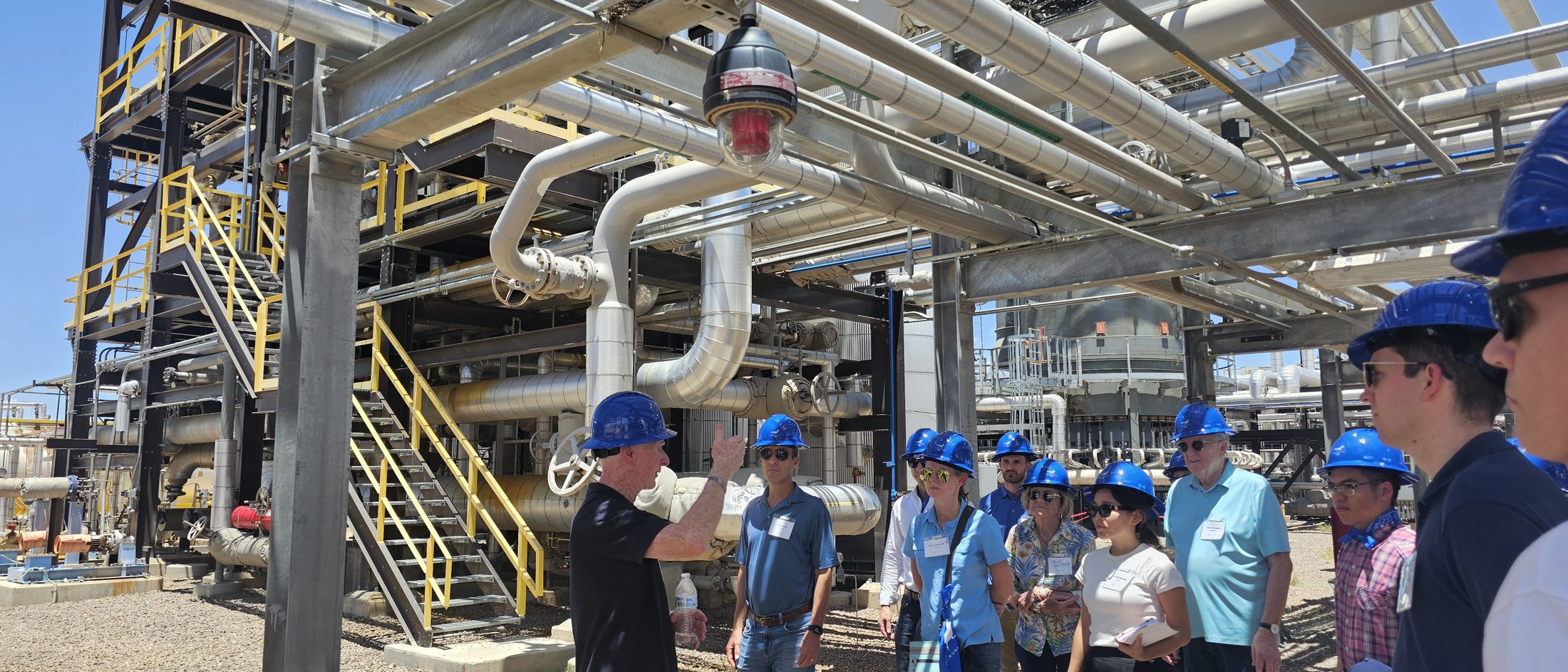
Aviation, long-haul road freight, shipping and petrochemicals are the sectors where electrification runs out of road. They need energy-dense liquid hydrocarbons, and they need them in the fleets and plants that exist today. Every Infinium product is built for that constraint first. Nothing here asks a customer to buy a new aircraft, retrofit an engine or lay new pipe.
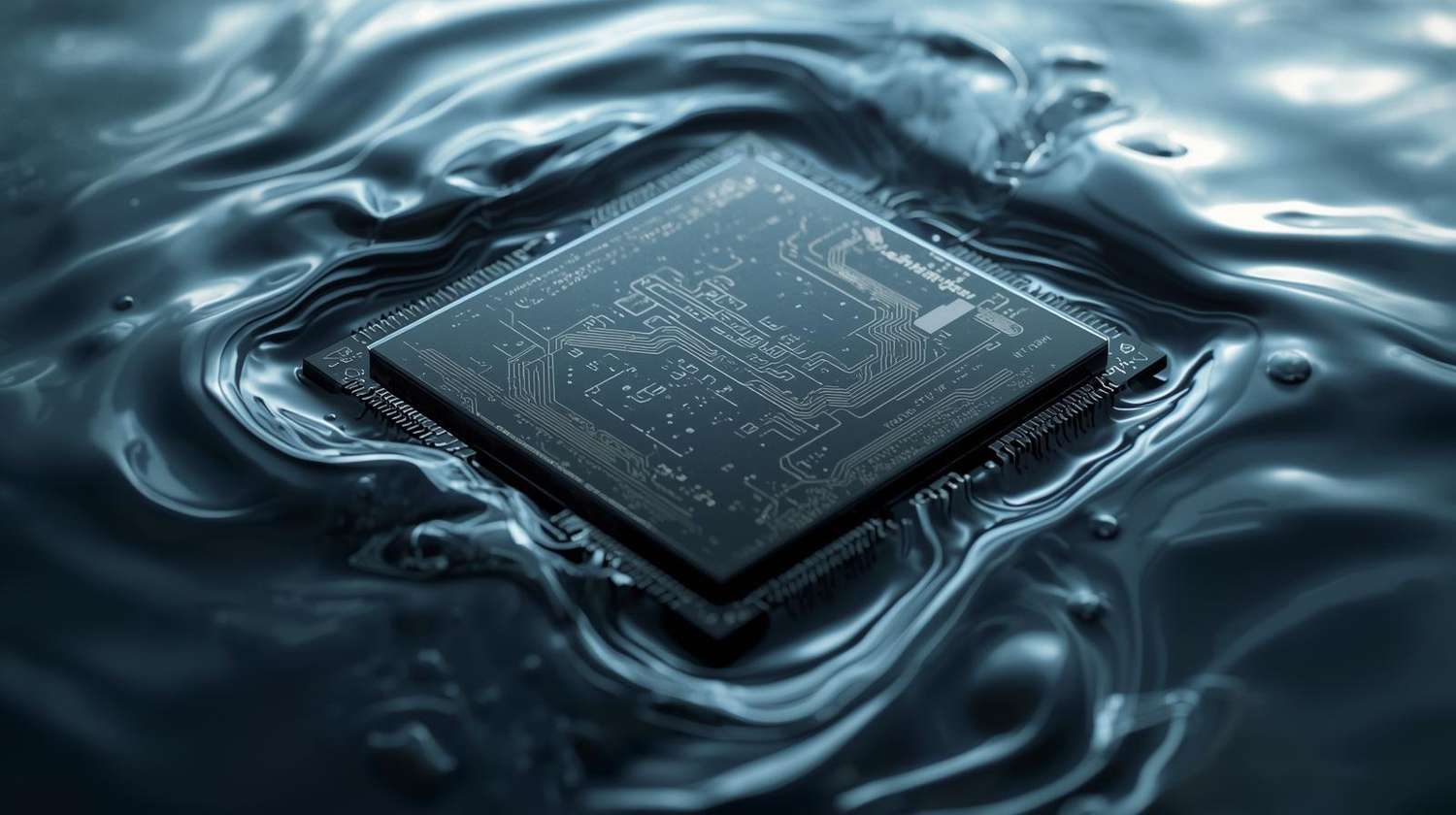
Alongside the fuels, Infinium Edge™ Immersion Fluids apply the same synthetic chemistry to a different problem: cooling the compute density that modern AI hardware demands.
| Product | Sector | Feedstock route | Status |
|---|---|---|---|
| eSAF | Aviation | Waste CO₂ and renewable power | In commercial production, flown 2026 |
| mSAF | Aviation | Methane and renewable power | Available for project development |
| eDiesel | Road freight, rail, marine | Either route | In commercial delivery |
| eNaphtha | Chemicals and plastics | Either route | In commercial delivery |
| Edge™ Immersion Fluids | Data centres and HPC | Waste CO₂ and renewable power | Sampling with operators |
Infinium eSAF
Flying todayAviation carries billions of passengers and millions of tonnes of freight a year, and there is no electric or hydrogen aircraft on the horizon that changes that at scale this decade. Sustainable aviation fuel is still under one per cent of the roughly 100 billion gallons of jet fuel the world burns annually.
eSAF closes that gap without touching the aircraft. It is a synthetic paraffinic kerosene made from waste carbon dioxide and renewable electricity, energy-dense, cleaner-burning, and low in the sulfur and aromatics that drive soot and particulate formation in a turbine.
In August 2026 eSAF produced at Project Pathfinder flew an American Airlines passenger service from Corpus Christi to Dallas Fort Worth — the first US commercial passenger flight powered by electrofuel.
| Product type | Synthetic paraffinic kerosene |
|---|---|
| Specification | Meets existing aviation turbine fuel specifications, within approved blend limits |
| Lifecycle GHG reduction | Around 90% against conventional jet fuel |
| Sulfur | None |
| Aromatics | 0.1–8 vol% |
| Density at 15 °C | 0.75–0.84 g/cm³ |
| Smoke point | 40–80 mm |
| Feedstock | Waste CO₂ and renewable electricity |
| Produced at | Pathfinder, Corpus Christi. Roadrunner and Atlas in build and development |
| Contracted to | American Airlines, IAG |
Typical values from Infinium process data. Batch properties are confirmed on the certificate of analysis supplied with delivery.

Infinium mSAF
NewmSAF is aviation fuel made from methane rather than carbon dioxide. Pipeline natural gas, associated gas that would otherwise be flared, and renewable natural gas from landfill and digester sites are reformed into syngas in Infinium Reform™, then converted to finished jet fuel in the same Synthesize™ step that produces eSAF.
The point of mSAF is volume and siting. Removing the electrolyser removes the largest single capital and power cost in a power-to-liquids plant, which means projects can be built where gas is already stranded and where the renewable grid is not yet large enough to support electrolysis at scale.
| Product type | Synthetic paraffinic kerosene |
|---|---|
| Specification | Meets existing aviation turbine fuel specifications, within approved blend limits |
| Carbon intensity | Depends on gas source and power supply. See carbon intensity |
| Sulfur | None |
| Aromatics | Very low |
| Feedstock | Natural gas, associated and flare gas, RNG, biogas, refinery tail gas |
| Reforming | Infinium Reform™ electrified steam reformer |
| Fuel synthesis | Infinium Synthesize™, identical to the eSAF route |
| Availability | Open for project development and technology licensing |
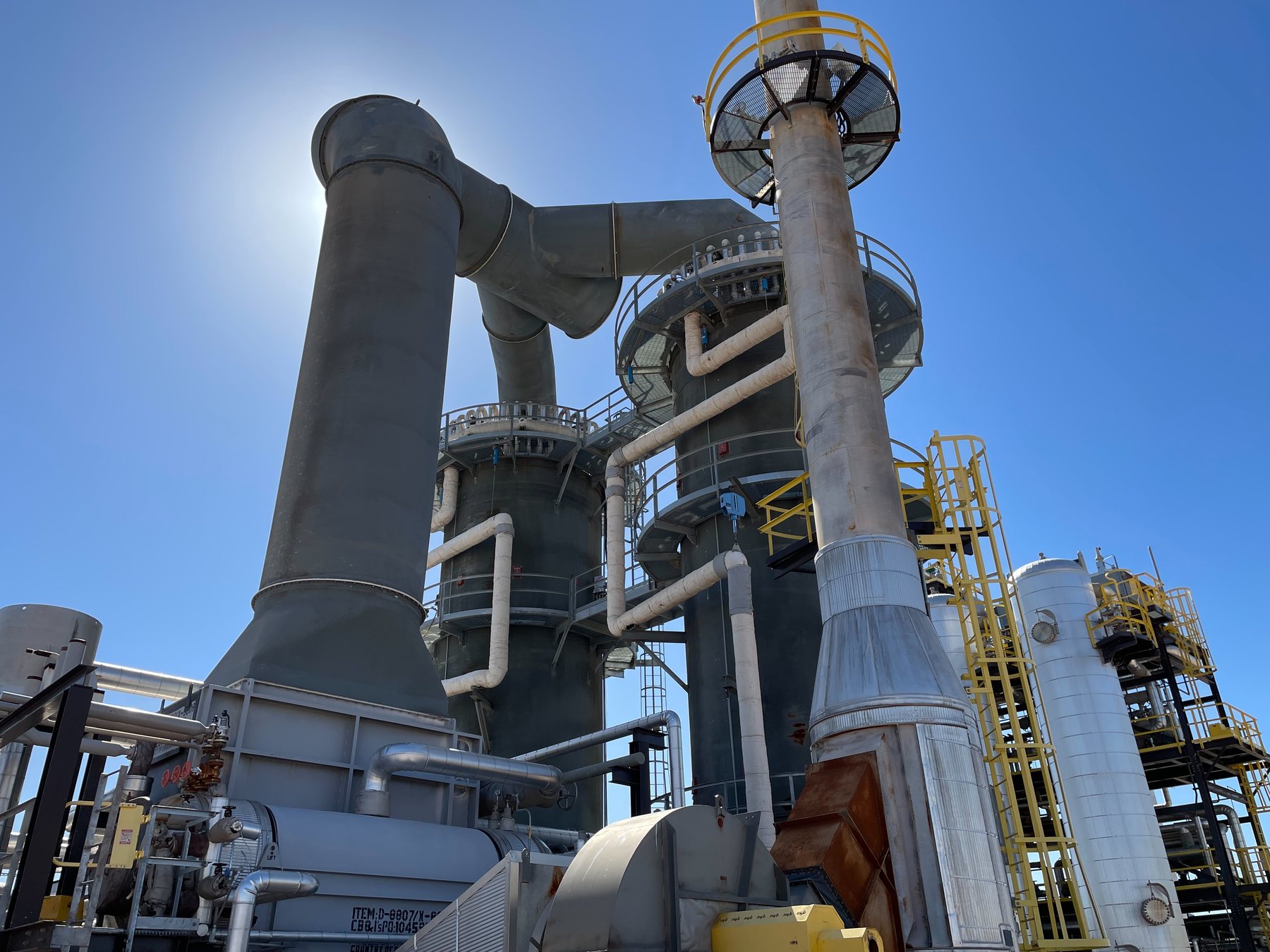
Infinium eDiesel
In deliveryMedium and heavy trucks, locomotives and ships are the workhorses of the global economy and they consume enormous volumes of petroleum diesel and fuel oil. Freight volumes are forecast to keep rising, and the fleets turning over today will still be running in the 2040s.
eDiesel drops into those engines now. It has high cetane and no sulfur, which means it burns more cleanly than the fuel it replaces and releases fewer of the air toxins that concentrate around ports, rail yards and freight corridors. Amazon has been running eDiesel from Pathfinder in delivery operations since the plant started up.
| Product type | Synthetic paraffinic diesel |
|---|---|
| Specification | Meets existing diesel fuel specifications |
| Carbon intensity | Near zero on the CO₂ route |
| Cetane | High |
| Sulfur | None |
| Combustion | Lower NOx, SOx and particulates than petroleum diesel |
| Regulatory | Eligible under low-carbon fuel programmes, including UK and EU eDiesel mandates |
| Applications | Long-haul trucking, rail, marine, off-road |
| In service with | Amazon |
Infinium eNaphtha
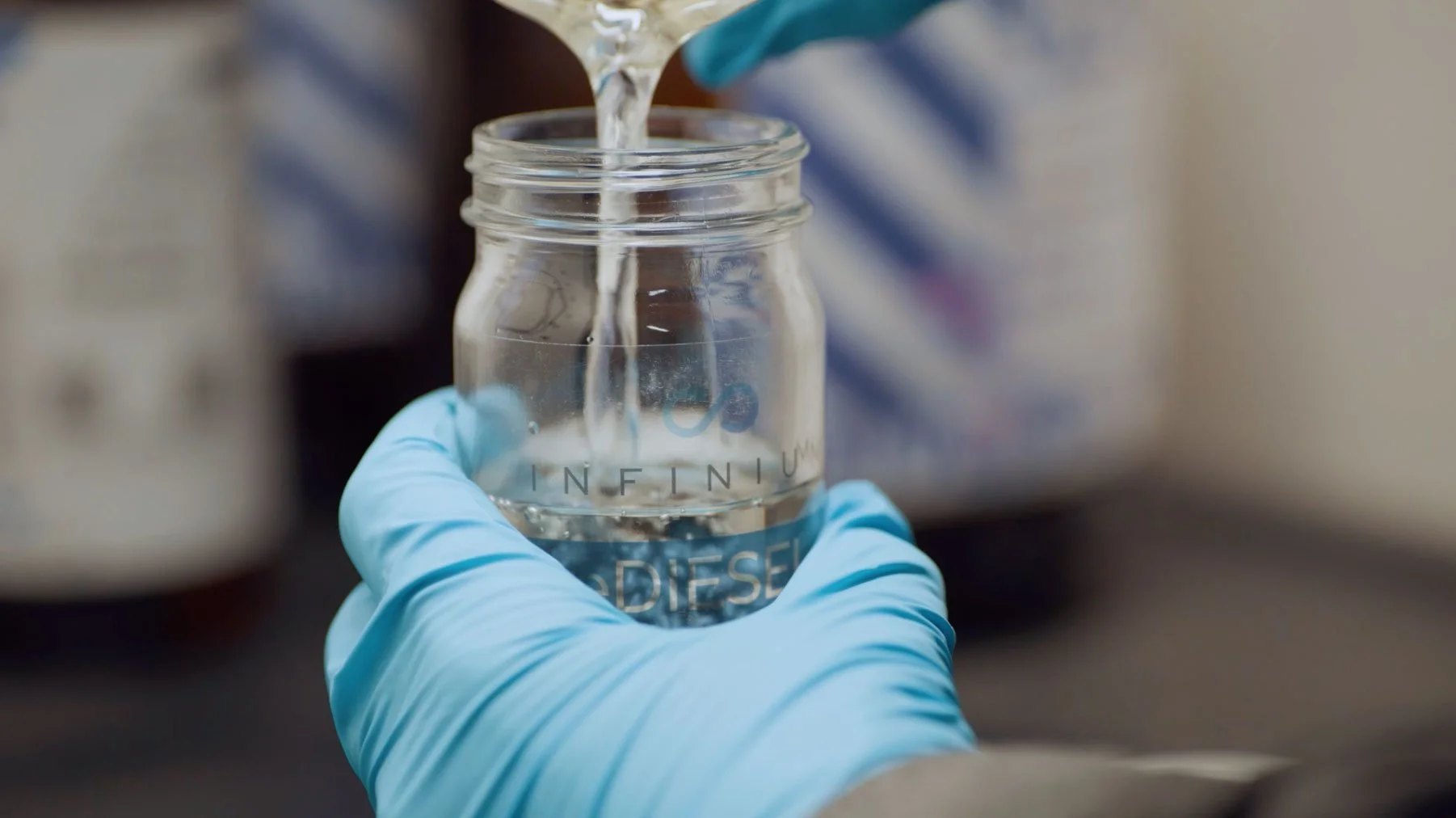
In deliveryNaphtha is the feedstock beneath an enormous share of everyday material life: medical devices, water infrastructure, packaging, electronics, footwear. It is also one of the most greenhouse-gas intensive inputs in manufacturing, because it comes out of a crude oil refinery.
eNaphtha replaces it directly in a steam cracker with no reformulation. It contains no aromatics and has high paraffin content, which makes it a clean cracker feed, and it carries negative carbon intensity at the plant gate. Borealis uses Infinium eNaphtha to make low-carbon polymers, and On's CleanCloud midsole — the first EVA midsole made from captured carbon at commercial scale — is built on it.
| Product type | Synthetic paraffinic naphtha |
|---|---|
| Replaces | Petroleum-derived naphtha feedstock |
| Carbon intensity | Negative at plant gate on the CO₂ route |
| Aromatics | None |
| Paraffin content | High |
| Sulfur | None |
| Applications | Polymers, solvents, surfactants, cosmetics, specialty chemicals |
| In service with | Borealis, On |
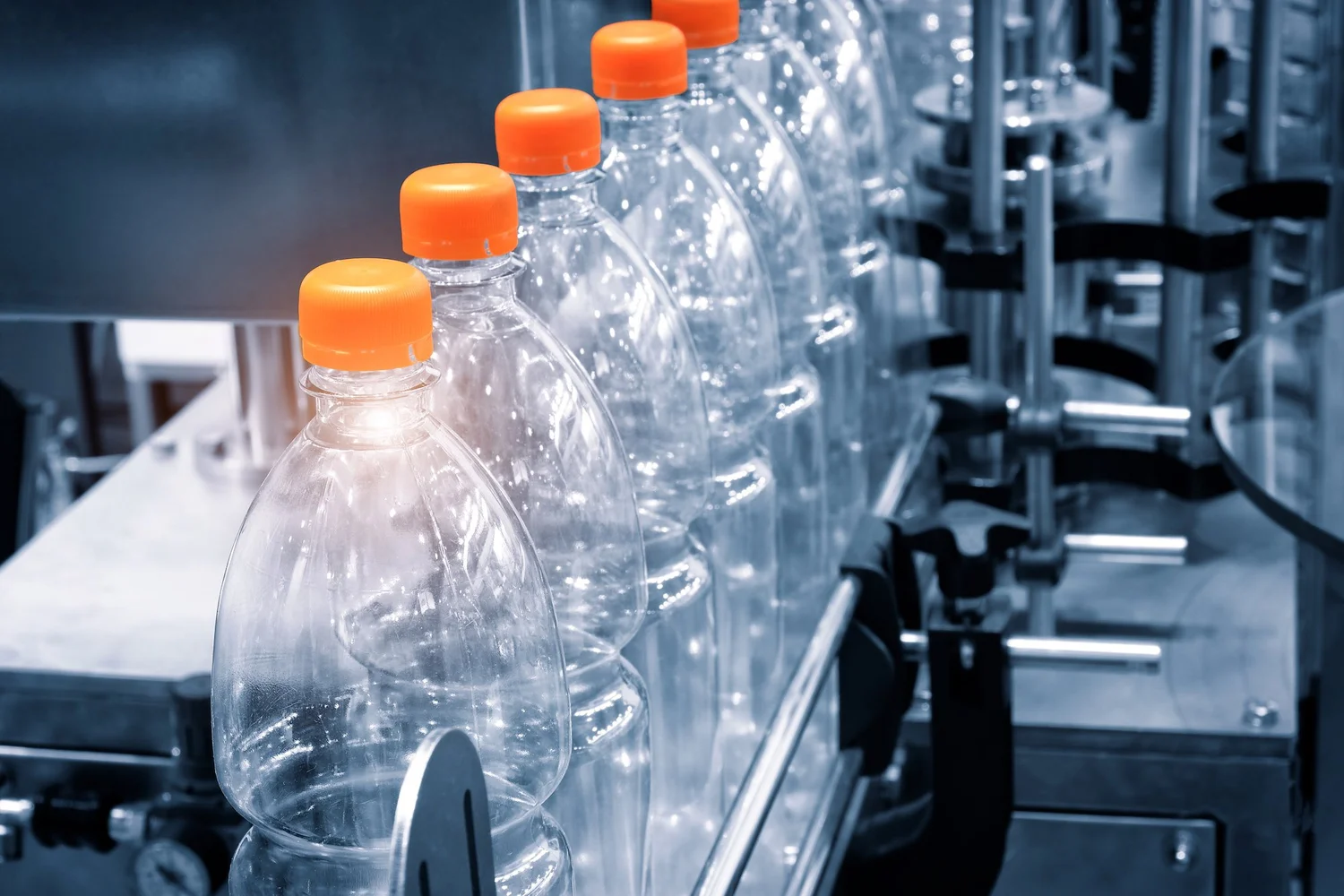
Infinium Edge™ Immersion Fluids
SamplingAI accelerators have crossed a thermal threshold. Air cooling has run out of headroom, direct-to-chip extended the runway, and the next generation of silicon will push past that too. Meanwhile cooling energy and water consumption have become the binding constraints on where a data centre can be built at all.
Edge Immersion Fluids are single-phase dielectric liquids formulated through the same synthetic chemistry as the fuels. They are non-conductive and non-corrosive, thermally stable, and compatible with common data centre materials, so heat is carried away from the die with no chillers, no hot aisle and no evaporative water loss. Because the base molecules come off Infinium's power-to-liquids platform, the fluid carries a carbon-negative lifecycle rather than the high global warming potential of fluorinated coolants.
| Fluid type | Single-phase dielectric immersion fluid |
|---|---|
| Electrical | Fully non-conductive, non-corrosive |
| Cooling energy | Up to 95% lower than legacy air systems |
| Water use | Closed loop; chillers and evaporative systems eliminated |
| Lifecycle carbon | Carbon-negative chemistry from the power-to-liquids platform |
| End of life | Reclaimable and recyclable for closed-loop reuse |
| Applications | AI and machine learning clusters, HPC, hyperscale and modular data centres, edge and retrofit |
| Deployed in | Infinium Edge™ modules, up to 250 kW per rack at a target PUE near 1.05 |
Which product fits your fleet?
Tell us the volume, the delivery point and the compliance regime you need to satisfy. We will come back with what is available now and what can be contracted from projects in build.
- Long-term take-or-pay offtake for eSAF and mSAF
- Spot and term supply of eDiesel and eNaphtha
- Certificate-based SAF supply for corporate travel programmes
- Technology licences for operators who want to produce their own