
Three systems. Operated, not theorised.
React™, Synthesize™ and Reform™ each run at commercial scale today. Each is available as a licence with its catalyst and core equipment, on its own or as one integrated plant.
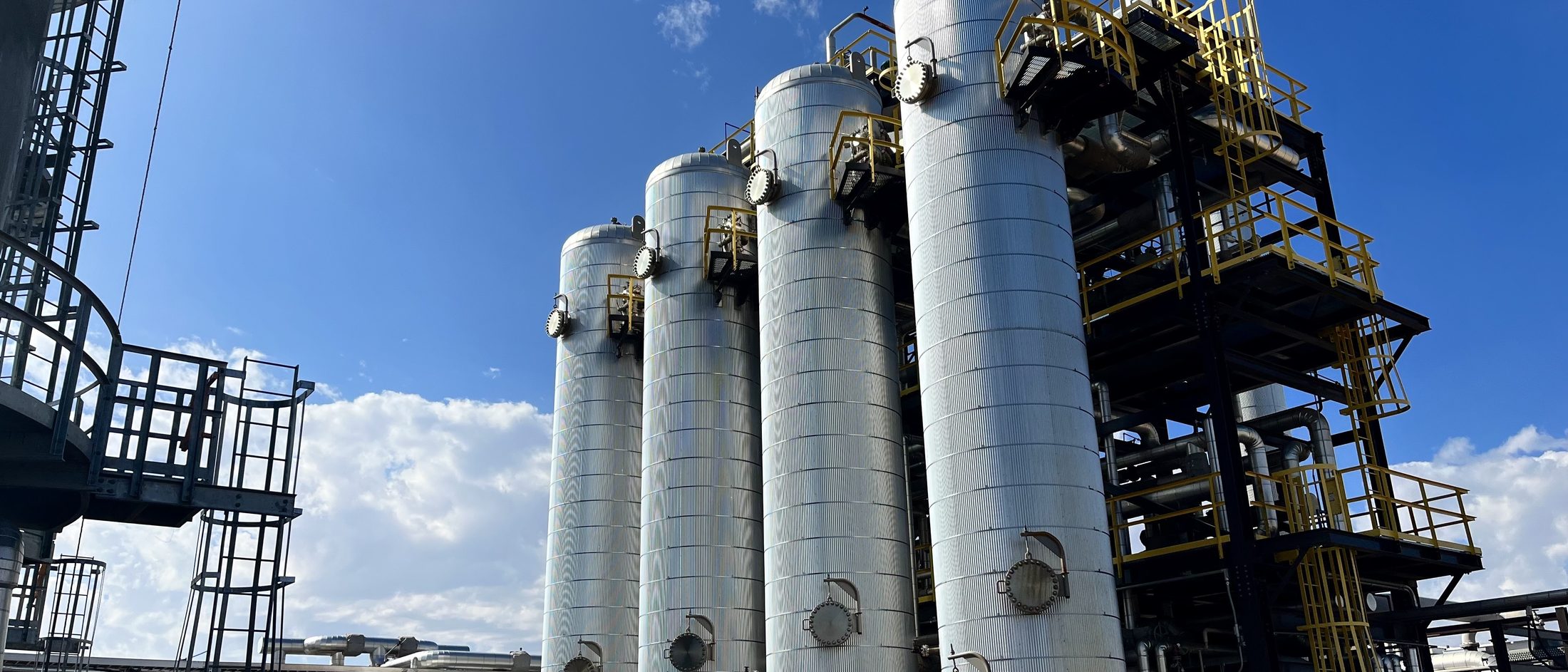
Infinium is unusual in this industry in that it sells both the fuel and the means of making it. The company holds more than 250 patents worldwide covering power-to-liquids and gas conversion, along with proprietary catalysts and reactor designs, expanded in 2025 through the acquisition of gas conversion specialist Greyrock Technology.
The architecture is deliberately modular. A front-end system makes syngas from whatever carbon is available. A back-end system turns syngas into finished liquid fuel. Because the two are decoupled, the same fuel synthesis train can be fed by carbon dioxide, by methane, or by a syngas stream a customer already produces for another purpose.
Infinium React™
Operating since 2023React is the syngas front end for the carbon dioxide route. It takes waste CO₂ paired with green or blue hydrogen and produces low-carbon syngas through reverse water-gas shift.
Since 2023 Infinium has run the world's first commercial-scale syngas production system using waste CO₂ and green hydrogen. That is not a pilot record; it is years of operating data on a first-of-a-kind unit, which is the difference between a technology that can be financed and one that cannot.
Syngas from React can feed Synthesize to make liquid fuels, or go downstream into conventional processing for other products entirely.
| Function | Syngas production from carbon dioxide |
|---|---|
| Process | Reverse water-gas shift |
| Inputs | Waste CO₂, green or blue hydrogen, renewable power |
| Output | Low-carbon syngas: carbon monoxide and hydrogen |
| Operating history | First commercial-scale unit of its kind, in service since 2023 |
| Downstream options | Infinium Synthesize™, or industry-standard syngas processing |
| Available as | Technology licence, catalyst, core equipment |
Infinium Synthesize™
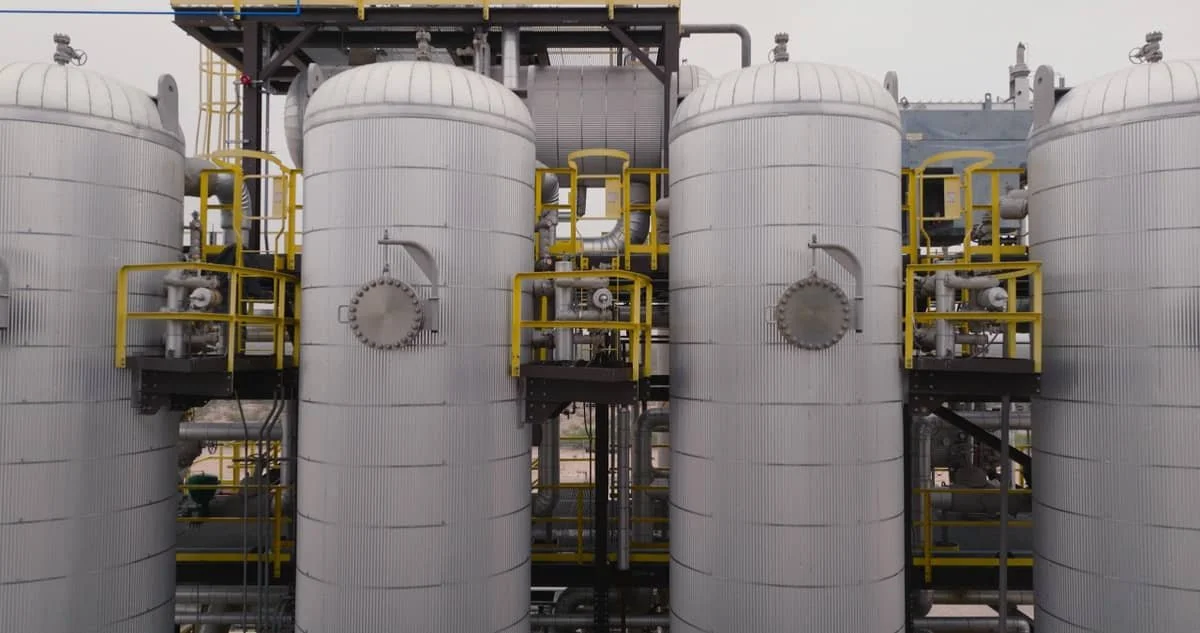
Commercially operatedSynthesize is where syngas becomes fuel, and it is the piece of the platform that most distinguishes Infinium from the rest of the field.
A conventional Fischer-Tropsch train produces mostly wax. That wax then has to be hydrocracked and fractionated, which in practice means either building a refinery alongside the plant or trucking product to someone else's. Synthesize uses a chain-limiting catalyst that produces specification liquid fuels directly, in fewer steps, with no wax refining and no co-processing.
The consequence is a smaller plant, a lower unit cost and a genuinely modular footprint. It is also why Infinium can scale a facility to a customer's volume rather than requiring the customer to scale up to a minimum viable refinery.
| Function | Liquid fuel and chemical production from syngas |
|---|---|
| Process | Fuel-selective catalytic conversion using a chain-limiting catalyst |
| Inputs | Syngas from React™, Reform™, or a third-party source |
| Outputs | eSAF, mSAF, eDiesel, eNaphtha, specialty chemicals and fluids |
| Wax refining | Not required. Fuel is produced directly to specification |
| Product quality | Chemically identical to conventional fuels, with no sulfur and low aromatics |
| Available as | Technology licence, catalyst, core equipment |
Infinium Reform™
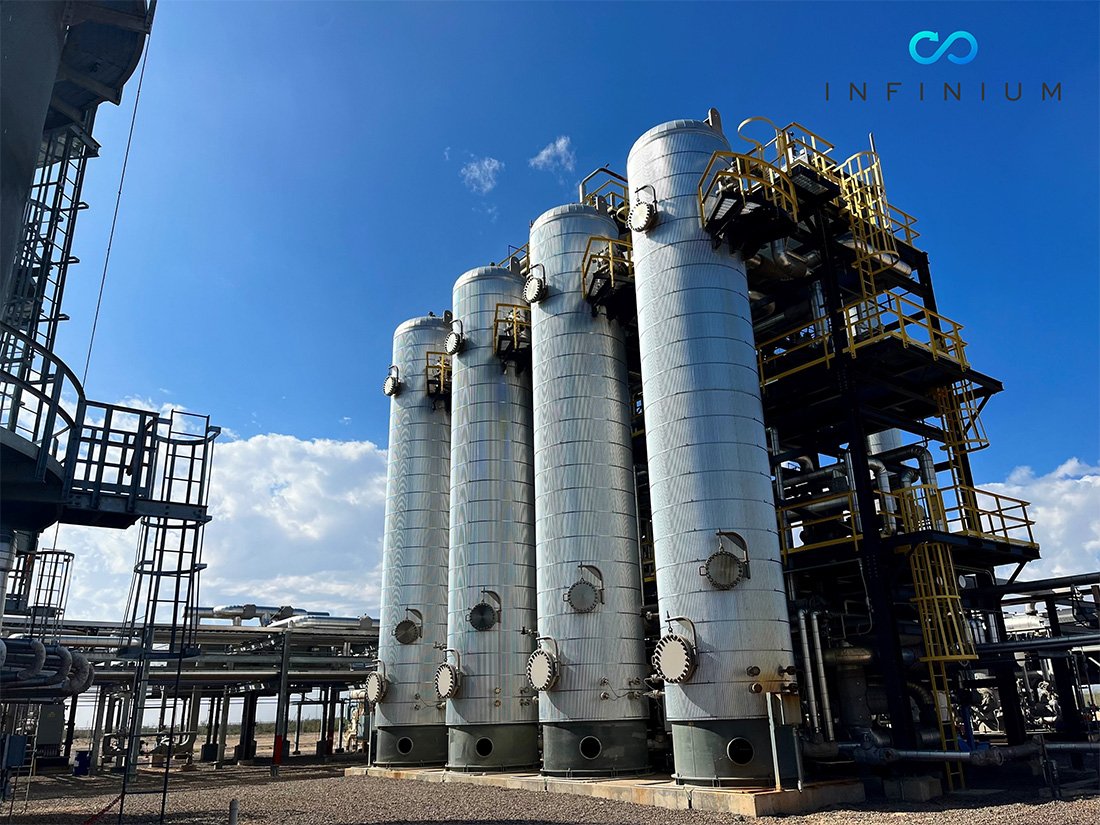
World first at commercial scaleReform is the syngas front end for the methane route, and the system that makes mSAF possible. It is the world's first electrified steam methane reformer at commercial scale — and Infinium is now building the world's largest.
Conventional steam methane reforming is heated by burning gas, which is why it is one of the most carbon-intensive unit operations in the chemical industry. Reform replaces fired heat with electricity as its only external energy input, which removes those combustion emissions from the process entirely.
It handles a wide range of light hydrocarbons — natural gas, flare gas, renewable natural gas, tail gas and NGLs — and it can be dropped into an existing refinery or gas plant to supplement hydrogen or syngas production without rebuilding the site around it.
| Function | Syngas or hydrogen production from light hydrocarbons |
|---|---|
| Process | Electrified steam methane reforming |
| External energy input | Electricity only. No fired heat |
| Accepted feeds | Natural gas, flare gas, RNG, biogas, tail gas, NGLs |
| Process emissions | Significantly reduced against conventional fired SMR |
| Scale | The world's largest electrically heated steam reformer is under construction |
| Retrofit | Deployable at existing processing and refining assets |
| Available as | Technology licence, catalyst, core equipment |
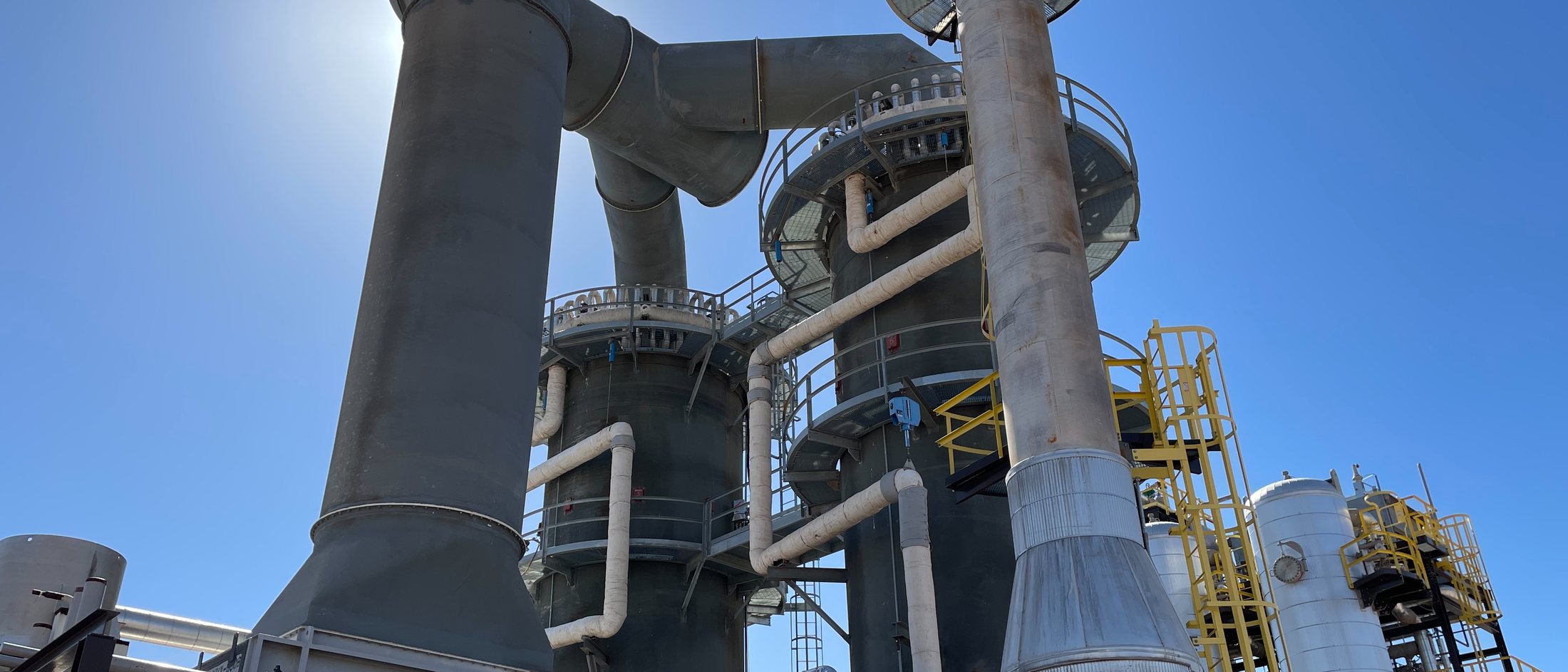
Building the world's largest electrically heated steam reformer
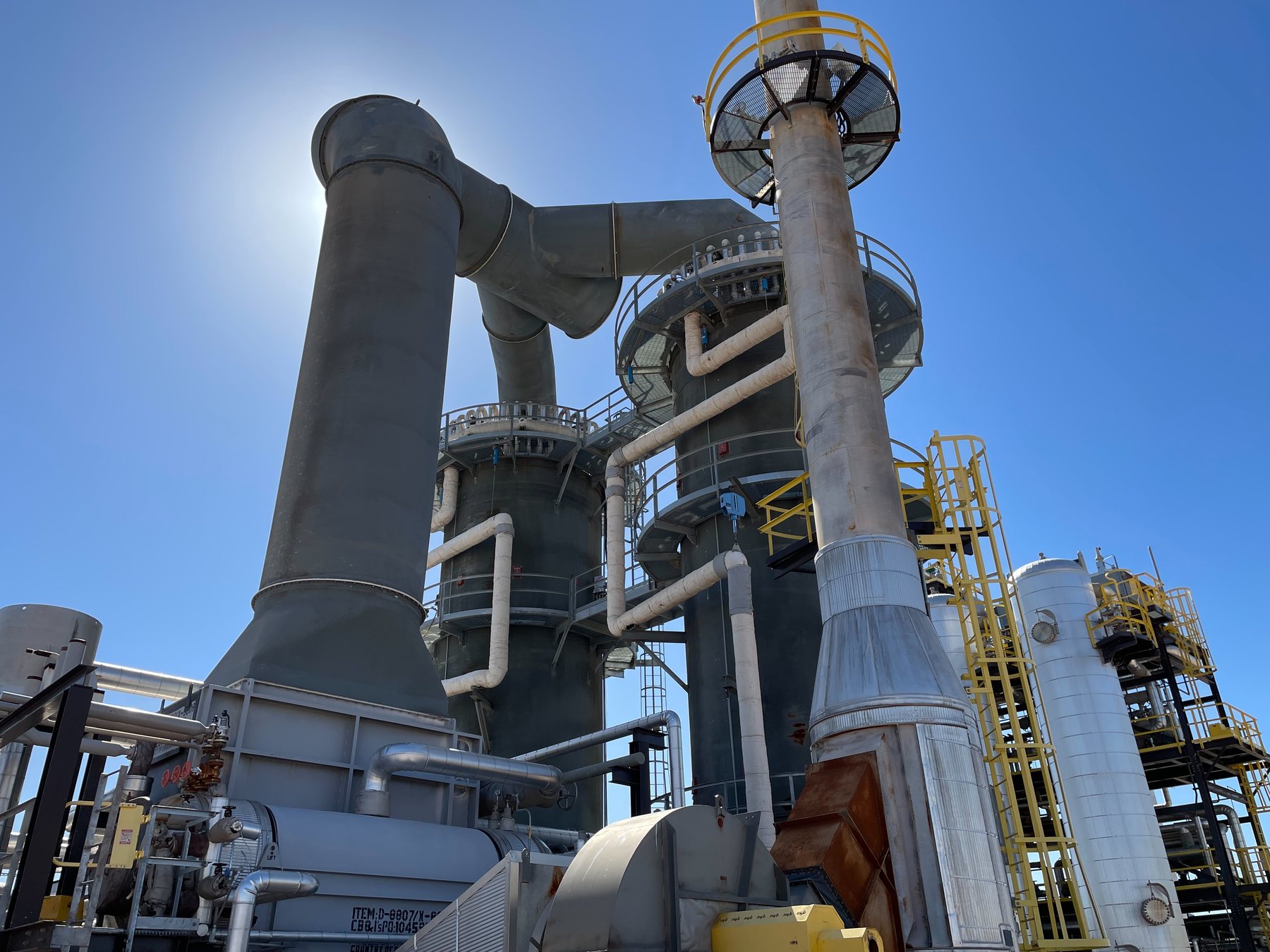
Electrified reforming has been demonstrated at pilot scale by several groups. Taking it to the size an industrial fuels plant actually needs is a different problem. The heat has to reach every reformer tube evenly by resistance rather than from a firebox, at an industrial duty, and hold that profile while the plant swings with its feed.
The unit Infinium is building will be the largest electrically heated steam reformer in the world when it comes online. It is the architecture the company has already operated commercially, scaled up rather than reinvented, which is why it is proceeding as a construction project and not a research programme.
Fewer steps between syngas and specification
There are three broad routes from carbon and hydrogen to jet fuel in commercial development today. They differ in how many unit operations sit between the feedstock and a fuel that can go in a wing.
| Route | Steps after syngas | Refining needed | Scale characteristics |
|---|---|---|---|
| Infinium Synthesize™ | One. Direct fuel-selective synthesis | None. Fuel produced to specification | Modular. Scales to project volume, up or down |
| Conventional Fischer-Tropsch | Synthesis, then hydrocracking and fractionation of wax | Yes. Refinery integration or co-processing | Favours very large plants to justify the refining train |
| Methanol to jet | Methanol synthesis, methanol to olefins, oligomerisation, hydrogenation, fractionation | Extensive upgrading | Decouples production from synthesis; more unit operations to build and run |
What a licence actually includes
Infinium's systems can be deployed individually, integrated into an existing processing facility, or built together as a fully integrated conversion plant. Customers come to this from very different starting points: a refinery with a vented CO₂ stream, a producer with associated gas, a national energy company building a fuels hub from scratch.
- Technology licence to the relevant Infinium systems
- Proprietary catalysts, supplied and supported
- Proprietary core equipment and reactor designs
- Process design package sized to your volumes
- Modular configurations that scale up or down to the site
- Retrofit into legacy processing and refining assets
- Support drawn from operating a first-of-a-kind plant, not a data sheet
- Joint development and partnership structures where they make sense
Infinium has taken novel energy technology from research through to commercial operation three times over: the first small-scale modular gas-to-liquids facilities deployed anywhere, the first fully integrated eFuels plant at commercial scale, and the first commercial syngas production from waste CO₂ and green hydrogen. Licensing partners are buying that execution record as much as the chemistry.